Structured System Access
Agents connect to CRM, scheduling, ticketing, and operational platforms through defined tool interfaces with authorization boundaries and audit trails.

AI AGENT DEVELOPMENT
NEW SERVICEProduction-grade voice and conversational AI agents integrated with CRM systems, operational platforms, knowledge bases, and business workflows. Engineered for qualification, scheduling, transaction execution, and structured operational automation.
.376umtdbqg2nm.png)
Dharwin Agent
Production Demonstration
Conversation Status
Press initiate to begin a live demonstration call.
n AI agent is a production system that conducts structured conversations, interprets stated and implied requirements across multiple turns, and executes operational actions within connected business systems. Unlike static chat interfaces, a modern agent maintains conversational context, accesses authorized tools and data sources, and completes defined workflows with documented outcomes.
Structured conversations form the interaction layer — the agent follows conversation maps that govern qualification paths, information collection sequences, and confirmation steps. Multi-turn reasoning allows the agent to resolve ambiguity, request clarification, and adapt responses based on prior exchanges within a single session.
Operational execution connects conversation to action. Agents schedule appointments, update CRM records, trigger workflow automations, retrieve knowledge base content, and route exceptions to human operators. Context awareness ensures each interaction reflects customer history, account status, and organizational policies.
Human escalation is not a failure state — it is a designed capability. When confidence thresholds are not met, when policy requires review, or when the caller requests a person, the agent documents the interaction, transfers context, and initiates a structured handoff with full transcript availability.
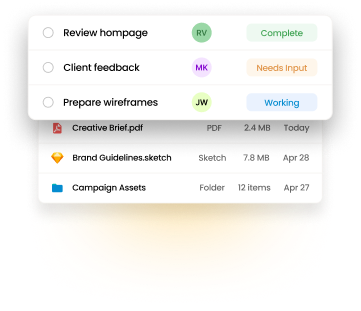

Agents connect to CRM, scheduling, ticketing, and operational platforms through defined tool interfaces with authorization boundaries and audit trails.
Multi-turn conversation memory, knowledge base retrieval, and customer record integration enable responses grounded in organizational data rather than generic outputs.
Low-confidence situations, policy exceptions, and explicit escalation requests route to human operators with full conversation context and recommended next actions.
.03i6i8lwujwar.png)
Telephony-focused
Voice-native agents deployed on telephony infrastructure for inbound and outbound call handling. Engineered for natural conversation flow, real-time speech processing, and integration with existing phone systems and call routing.
Use Cases
.0-pyr2a-uh5q-.png)
Web · Mobile · Messaging
Text-based agents deployed across web interfaces, mobile applications, and messaging platforms. Designed for asynchronous and synchronous engagement with knowledge retrieval and lead capture capabilities.
Use Cases

Event-driven · Non-conversational
Non-conversational agents triggered by system events, document uploads, or scheduled processes. Execute structured operational tasks without user-facing dialogue — processing, extraction, classification, and routing.
Use Cases
TwilioLiveKitPlivoDeepgramWhisperOpenAIAnthropicGeminiElevenLabsCartesiaPostgres + pgvectorPineconeLiveKit AgentsLangGraphCustom InfrastructureA live demonstration voice agent accessible directly in the browser via WebRTC. No installation, no account creation, no commercial commitment. Experience production-grade conversation flow, knowledge retrieval, and scheduling capability in a controlled demonstration environment.
.0pd8k7r9g-mpk.png)
Dharwin Agent
Production Demonstration
Conversation Status
Press initiate to begin a live demonstration call.
Transcript will appear during demonstration
DEVELOPMENT PROCESS
A five-stage framework for designing, integrating, testing, and deploying production-grade AI agents with documented accountability at each gate.
Definition of conversation flows, qualification paths, information collection sequences, escalation triggers, and success criteria. Conversation maps are reviewed and approved prior to implementation.
Connection to CRM, scheduling, ticketing, knowledge base, and operational systems through defined tool interfaces. Authorization boundaries, error handling, and audit logging configured per integration.
Ingestion, chunking, and vectorization of organizational documentation. Retrieval configuration, relevance thresholds, and response grounding validated against representative queries.
Structured testing across conversation paths, edge cases, escalation scenarios, and integration points. Performance benchmarking against latency, accuracy, and handoff requirements.
Staged rollout with monitoring, alerting, and operational runbooks. Post-deployment review at defined intervals with performance metrics and optimization recommendations.
Deployment configurations available for United States, European Union, India, and additional jurisdictions based on organizational requirements.
Data encrypted in transit and at rest. TLS for all network communication. At-rest encryption for conversation transcripts, knowledge base content, and operational logs.
Configurable consent flows aligned with jurisdictional requirements. Recording disclosure, opt-out mechanisms, and retention policies defined per engagement.
Frameworks aligned with TCPA, TRAI, GDPR, and applicable regional telephony regulations. Compliance review conducted during discovery and agent design.
Comprehensive logging of agent actions, tool executions, escalation events, and system interactions. Logs retained per organizational policy with export capability.
Every production agent includes documented escalation paths. Human operators receive full conversation context, customer record access, and recommended next actions.
Phase 01
Structured discovery engagement to define conversation flows, integration requirements, knowledge base scope, and success criteria. Delivered as a flat-fee engagement with documented agent specification.
Pricing scoped during consultation based on conversation complexity and integration surface.
Phase 02
Per-agent implementation fee scoped against conversation surface complexity, tool integration count, knowledge base scale, and deployment requirements. Includes conversation mapping, integration, testing, and production deployment.
Implementation scope and commercial terms defined in written proposal following discovery.
Phase 03
Usage-based runtime costs calculated per minute or per conversation. Includes pass-through of AI vendor costs with Dharwin operational margin. Monitoring, alerting, and optimization included in runtime engagement.
Runtime economics reviewed during consultation with projected volume modeling.
Production voice agents are engineered for sub-1.2-second end-to-end latency under standard network conditions. Latency encompasses speech-to-text processing, language model inference, tool execution, and text-to-speech synthesis. Conversational agents on text channels typically respond within 800 milliseconds. Latency benchmarks are validated during conversation testing prior to production deployment.
Runtime costs are usage-based, calculated per minute for voice agents or per conversation for text-based agents. Costs include pass-through of AI vendor charges — speech processing, language model inference, text-to-speech synthesis, and vector retrieval — plus Dharwin operational margin for monitoring, alerting, and optimization. Projected runtime economics are modeled during discovery based on anticipated conversation volume.
Voice and conversational agents support multilingual deployment across major business languages. Language capability depends on selected speech-to-text, language model, and text-to-speech providers. Multilingual requirements are assessed during discovery, with language-specific testing conducted prior to production deployment.
Agents operate with defined confidence thresholds. When confidence falls below configured levels, when policy requires human review, or when the user explicitly requests escalation, the agent initiates a structured handoff. The human operator receives full conversation transcript, customer record context, and a recommended next action. All escalation events are logged for review and agent optimization.
Agents can be deployed in Dharwin-managed infrastructure or within client-controlled environments, subject to integration and security requirements. Deployment options — including data residency, network boundaries, and access controls — are defined during discovery and documented in the agent specification.
A production AI agent conducts structured multi-turn conversations, executes operational actions within connected systems, maintains context across interactions, and includes documented escalation behavior. Standard chatbots typically provide scripted responses without system integration, tool execution, or governed handoff. Dharwin agents are engineered for operational outcomes — qualification, scheduling, transaction execution — rather than informational deflection alone.
Production agents include real-time monitoring dashboards, alerting for error rates and latency thresholds, and scheduled performance reviews. Conversation analytics cover completion rates, escalation frequency, tool execution success, and knowledge base retrieval accuracy. Optimization recommendations are provided at defined review intervals.
A single production agent — from discovery through deployment — typically requires six to eight weeks. Timeline varies based on conversation complexity, integration count, knowledge base scale, and testing requirements. Multi-agent engagements are sequenced with parallel workstreams where integration dependencies permit.
Schedule a walkthrough to evaluate operational use cases, implementation requirements, integration complexity, and expected outcomes.